Culture
BUDDY HOLLY AT 90: STORIES EVEN LIFELONG LUBBOCK RESIDENTS MAY NOT KNOW
Filed September 7, 2026
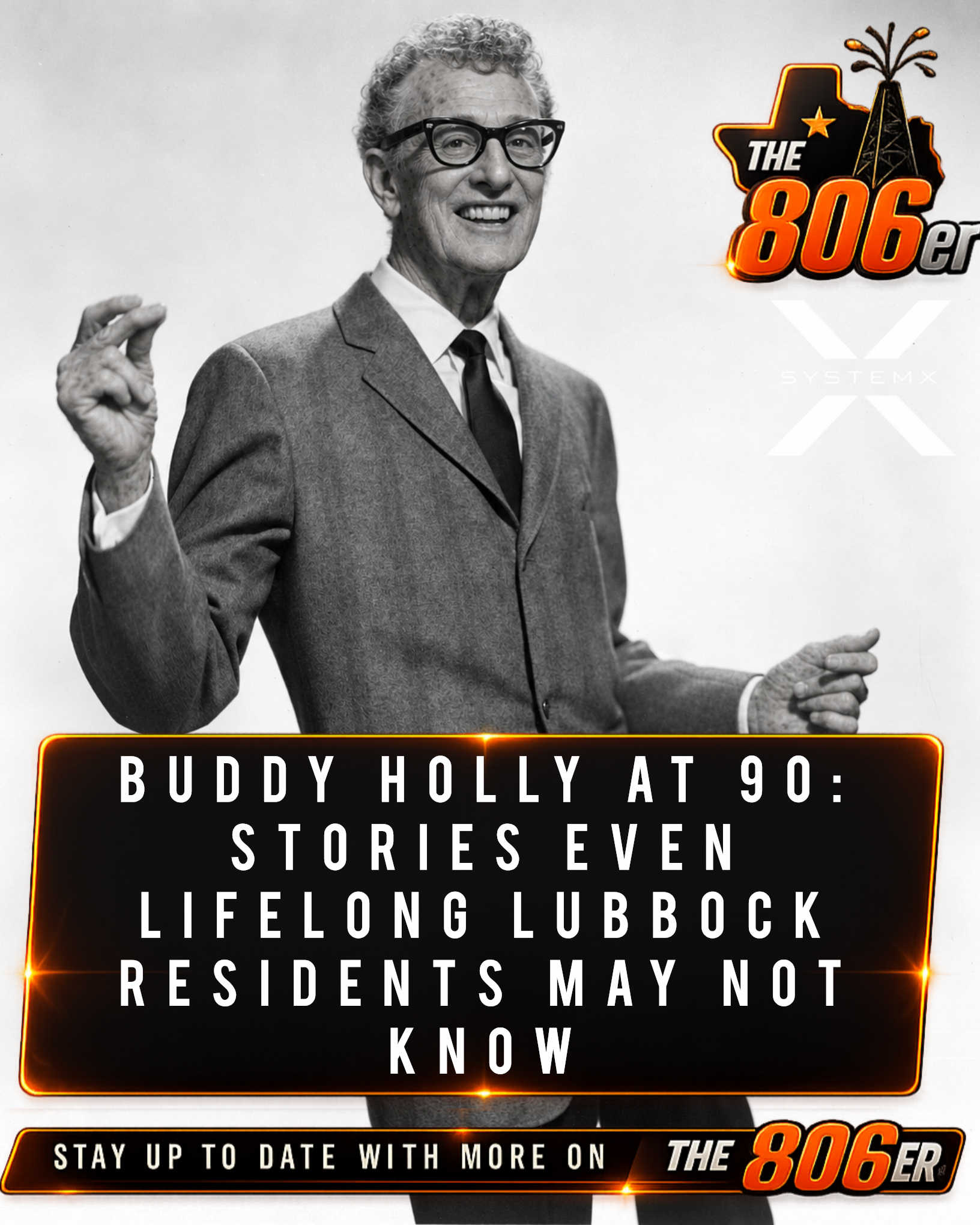
BUDDY HOLLY AT 90: STORIES EVEN LIFELONG LUBBOCK RESIDENTS MAY NOT KNOW
LUBBOCK, Texas — Buddy Holly would have turned 90 years old today. In Lubbock, nearly everyone knows the glasses, the Fender Stratocaster, The Crickets and the tragedy that ended his life at only 22. His name is attached to a street, a museum, a park, a performing arts hall and countless pieces of local history. But buried beneath the familiar story are details that reveal someone far more ambitious, experimental and business minded than the image most people remember.
Buddy was attracting attention before his fourth birthday. A 1940 Lubbock newspaper article covering another child’s birthday party casually reported that “Buddy Holley sang a song for the occasion.” At five years old, he entered a talent contest with his older brothers. They reportedly greased the bow of his toy violin so it would not make noise, but Buddy’s singing still helped the group win the $5 first place prize.
His first recording also came years before most people realize. Around age 12 or 13, Buddy recorded himself singing Hank Snow’s “My Two Timin’ Woman” using a wire recorder. Before magnetic tape became common, wire recorders captured sound on a thin steel wire. The future pioneer of studio recording began experimenting with recorded music using technology that already seemed old by the time he became famous.
Long before Buddy Holly became a rock and roll name, he was primarily a country and bluegrass performer. He appeared on KDAV’s “Sunday Party” with Jack Neal and later Bob Montgomery. Buddy and Bob advertised themselves as “Western and Bop” performers. In 1954, they performed “Flower of My Heart,” written by Montgomery, during a Lubbock High School contest. It won and was selected as the school’s senior class song. Buddy’s transformation into a rock artist accelerated after he opened for and watched Elvis Presley perform in Lubbock.
Most locals know that Buddy was born Charles Hardin Holley, but the story behind the missing “e” is still unusual. When Decca Records sent his contract in 1956, his last name was mistakenly written as Holly. Instead of fighting the error, he adopted it professionally. The misspelling that could have been corrected became one of the most recognizable names in music.
The story of The Crickets’ name is even stranger. While searching an encyclopedia for insect names, Jerry Allison and the group briefly considered calling themselves “The Beetles” before settling on The Crickets. Years later, The Beatles would choose their own insect inspired name partly as a tribute to Buddy Holly’s group. In other words, one of the most famous band names in history was nearly used in Lubbock first. The Rock and Roll Hall of Fame credits Holly’s music and The Crickets’ identity with helping shape what came next.
The difference between “Buddy Holly” and “The Crickets” was not simply about whether he was performing solo. It was also a clever solution to a recording contract problem. After Decca declined to renew Buddy’s original deal, the company restricted him from rerecording songs from those sessions. The hit version of “That’ll Be the Day” was therefore released under The Crickets’ name. Records credited to The Crickets came out on Brunswick, while records credited to Buddy Holly were released on Coral. Both companies were connected to Decca. For a period, Buddy was essentially operating under two recording identities at the same time.
Some of his most famous recordings were also made with surprisingly simple tools. “Words of Love” marked Buddy’s first attempt at overdubbing, allowing him to layer recordings instead of capturing everything at once. The Clovis session that produced “Not Fade Away” and “Everyday” included a cardboard box, knee slaps and a celesta, a small keyboard instrument with a bell like sound. Those homemade choices helped create records that still sound distinct nearly seven decades later.
Even the background vocals people associate with The Crickets were not always sung by the band members seen onstage. A Lubbock vocal trio called The Picks, consisting of John and Bill Pickering and Bob Lapham, provided backing vocals on recordings including “Oh Boy” and “Maybe Baby.” The singers were not properly credited during Buddy’s lifetime. Their role is preserved today in the Texas Tech Southwest Collection.
One of the wildest stories happened during the group’s 1958 tour of England. During a scuffle before the final performance in London, bassist Joe B. Mauldin accidentally knocked the caps off Buddy’s two front teeth. Buddy temporarily repaired the damage by spreading chewing gum across his front teeth and still went onstage for the second show.
By 1958, Buddy was already looking beyond being a recording artist. He founded Prism Records and produced a session for a young Waylon Jennings, playing rhythm guitar on “Jole Blon” while King Curtis played saxophone. The Country Music Hall of Fame identifies Buddy as Jennings’ mentor and the producer of his first record. Texas Tech’s archives also note that Buddy intended to establish a record company and recording studio in Lubbock. Had he lived, Lubbock might have become more than his hometown. It could have become the headquarters of his growing music operation.
One of Buddy’s final Lubbock recordings reportedly began as a bet. On December 27, 1958, while visiting KLLL, he was challenged to write a song in less than 30 minutes. He wrote “You’re the One” and recorded it on the station’s acetate machine while Waylon Jennings and disc jockey Ray “Slim” Corbin provided handclaps. Just weeks later, Buddy left for the Winter Dance Party tour.
His final months also show how quickly he was evolving. In October 1958, he recorded “True Love Ways,” “Raining in My Heart,” “Moondreams” and “It Doesn’t Matter Anymore” during a New York string session. In December, he used an Ampex recorder inside his Greenwich Village apartment to record a group of intimate demos, including “Crying, Waiting, Hoping,” “Learning the Game” and “Peggy Sue Got Married.” In a letter to his parents, Buddy called the last song “top secret” because he wanted its release to be a surprise. Those apartment recordings sound like an early version of the home studios artists use today.
Perhaps the most uncomfortable part of Buddy Holly’s history is that Lubbock did not immediately embrace him the way it does now. Rock and roll faced heavy opposition in the conservative city of the 1950s. Former residents recalled preachers condemning or destroying rock records and teenagers driving into cotton fields to listen and dance away from adults. According to Texas Standard, it took nearly 20 years and the release of “The Buddy Holly Story” before Lubbock began publicly celebrating his influence in a major way.
That may be the most important lesser known fact of all. Buddy Holly did not become legendary because Lubbock built a legend around him. He became legendary despite many people around him not yet understanding what he was creating.
At 22, Buddy was already a singer, songwriter, guitarist, producer, label founder and studio innovator. The tragedy is not only that his life ended so young. It is that he was clearly still expanding, and the world never got to see what the next version of Buddy Holly would have become.
Information for this article was also verified through the City of Lubbock’s official Buddy Holly biographical timeline.